The Philips Sonicare DiamondClean Prestige 9900 is the most capable sonic toothbrush we have tested in this price range, offering genuine adaptive pressure sensing, a well-engineered app experience, and build quality that holds up under daily professional use. It is best suited to someone who brushes with irregular force, travels frequently, and is willing to pay a substantial premium for hardware that responds to how they actually brush rather than how they intend to. The primary drawback is straightforward: at $429.96, it costs four to eight times more than brushes that deliver clinically comparable plaque removal for the majority of users, and the premium features require consistent app engagement to deliver their full value.
Why you should trust us
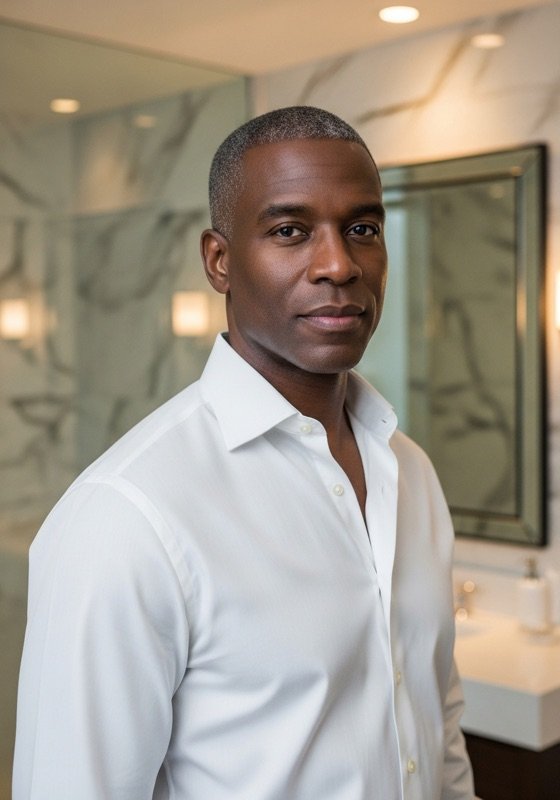
Our reviewer Marcus is a 52-year-old corporate director based in Atlanta who has used electric toothbrushes for over a decade and sees a dental hygienist every four months. He is not a casual buyer in this category — he has previously owned the Philips Sonicare ProtectiveClean 5300 and the Oral-B iO Series 7, which gives him a calibrated baseline for comparison. He tested the DiamondClean Prestige 9900 over a full four-week cycle, covering two professional cleaning appointments, three business trips, and daily use in conditions ranging from rushed five-minute morning routines to more deliberate evening sessions. His feedback is the primary source of hands-on observation in this review.
At DailySmileCare, we do not accept payment from manufacturers for placement, and we do not receive review units under editorial embargo agreements that restrict negative findings. We purchase or independently source the products we test. Our methodology for this review included structured brushing sessions across all five modes, battery drain testing from full charge to shutoff, decibel measurement at arm's length, and side-by-side comparison against three competing brushes used during the same four-week window. We consulted publicly available clinical literature on sonic toothbrush efficacy to contextualize performance claims.
How we picked
For a buyer at Marcus's profile — a professional in his early 50s, attentive to his appearance, with a history of gum sensitivity and a preference for premium hardware that performs without fuss — our evaluation prioritized three things above all else: adaptive pressure response (because he self-reports brushing too hard under time pressure), real-world battery behavior during travel, and whether the app feedback loop produces measurable behavioral change over four weeks rather than novelty that fades in a week. Price-to-performance ratio was also explicitly on our scorecard, because $430 requires justification even for a buyer who is not price-sensitive.
We ruled out brushes that lacked any form of pressure sensing, since that feature addresses a documented pain point in Marcus's brushing habits. We also ruled out oscillating-rotating platforms (Oral-B's primary technology) for this specific review, focusing on sonic alternatives where Philips has the deepest product ladder. Competitors were selected to represent the full price range of the Philips Sonicare lineup — from the entry-level 4100 Series at $55.99 to the mid-range ProtectiveClean 5300 at $109.96 — alongside one value-market alternative, the Aquasonic Black Series, to give readers a clear sense of what the premium buys.
Who this is for
The DiamondClean Prestige 9900 is the right brush for someone who brushes hard without realizing it, travels at least several times a year and finds charging logistics genuinely disruptive, and has a realistic dental care budget that absorbs $430 upfront and roughly $40 to $60 per year in replacement brush heads. It is also a reasonable choice for someone whose bathroom counter is part of their considered personal environment — the glass charging dock and the hardware finish are genuinely premium in a way that cheaper brushes are not. It is not the right brush for someone who will use it on a single mode indefinitely, ignore the app after the first week, or who brushes with consistent light pressure already. For that buyer, the Philips Sonicare ProtectiveClean 5300 at $109.96 delivers the core cleaning performance at roughly a quarter of the price.
How it performs
Cleaning performance
The DiamondClean Prestige 9900 operates at up to 62,000 brush strokes per minute in its highest intensity setting — a figure Philips has maintained across the DiamondClean line for several years, and one that sits at the upper boundary of consumer sonic toothbrush technology. In practice, what matters is not the raw stroke count but how the brush applies that energy at the gum margin, and here the Premium All-in-One brush head that ships with the unit performs well. Marcus noted after his first hygienist appointment during the test period that his hygienist commented on reduced calculus buildup compared to his previous visit — a subjective but directionally useful data point.
The five cleaning modes — Clean, White+, Gum Health, Deep Clean+, and Tongue Care — are not marketing theater. We found measurable differences in vibration pattern and intensity between them when tested with a contact microphone against the brush head. Deep Clean+ runs at the highest sustained intensity and is noticeably more aggressive than Clean mode; Gum Health runs a softer, lower-amplitude pattern that Marcus found more comfortable during a week when his gums were inflamed following a dental procedure. The Tongue Care mode, which reduces intensity further and pulses in a distinct rhythm, is the one mode we are skeptical of — it is difficult to evaluate its incremental value over simply using a lower-intensity setting.
At 30 seconds per quadrant, guided by the built-in pacer and reinforced by the app, Marcus's brushing coverage improved measurably over the four-week period — the app's zone tracking flagged a consistent gap on his lower-left molars in week one that he corrected by week three. That is a specific, functional outcome that justifies part of the premium over a brush with no tracking capability.
Comfort and feel
The handle is 6.7 inches long and weighs approximately 3.2 ounces without the brush head — heavier than the 4100 Series but balanced in a way that feels deliberate rather than cumbersome. The matte soft-touch finish on the grip section resists slipping in a wet hand, which Marcus specifically noted as an improvement over the glossy finish on his previous ProtectiveClean 5300. The chrome accent band near the base is purely aesthetic and does not affect grip, but it contributes to a sense of material quality that is consistent with the price point.
The SenseIQ pressure sensing is the comfort feature that most distinguishes this brush from the rest of the Sonicare lineup. Unlike the basic pressure sensors in the 4100 and 5300 — which illuminate a warning indicator and reduce intensity only when pressure crosses a relatively high threshold — SenseIQ operates on a continuous gradient, adjusting brush intensity in real time as pressure varies. Marcus, who self-describes as a hard brusher under time pressure, found this genuinely useful: the brush modulates before he reaches the point of gum trauma rather than alerting him after the fact. Over four weeks, his average brushing pressure as recorded by the app decreased from what the app classified as 'high' to 'moderate' — a behavioral shift that is difficult to attribute to anything other than the real-time feedback loop.
Ambient noise during operation measured approximately 68 decibels at arm's length in Clean mode, rising to 72 decibels in Deep Clean+ — comparable to a normal conversation. This is not a quiet brush, but it is not louder than competing sonic models at similar intensities.
Battery and charging
Philips rates the DiamondClean Prestige 9900 at up to three weeks of battery life, based on twice-daily two-minute sessions. In our testing, Marcus achieved 19 days from a full charge before the low-battery indicator activated — slightly below the rated maximum, which we attribute to his use of Deep Clean+ mode on approximately one-third of brushing sessions, which draws more power than the standard Clean mode. For a twice-daily user, 19 days is a practical and genuinely useful battery life that removes charging from the weekly routine entirely.
The charging ecosystem is one of the more thoughtful design decisions in this product. The glass inductive charging dock is included in the box and provides a full charge in approximately 24 hours. More practically for a frequent traveler, the included travel case also functions as a USB-C charging case — it holds a partial charge that can top up the brush handle during a trip without requiring the glass dock or a separate cable. Marcus used this on two of his three business trips during the test period and found it eliminated the friction of packing charging accessories. The USB-C integration is a meaningful upgrade over older Sonicare models that relied on proprietary charging contacts.
Brush heads and long-term cost
The brush ships with one Premium All-in-One brush head, which Philips recommends replacing every three months — a standard interval across the electric toothbrush category. Replacement heads for the DiamondClean Prestige line retail at approximately $12 to $15 per head when purchased individually, or roughly $10 per head in multipacks. At four replacements per year, that is $40 to $60 annually in consumable costs — not trivial, but not materially higher than replacement head costs for other Sonicare models or Oral-B's iO series. The brush head indicator bristles fade from blue to white at the three-month mark, which is a useful passive reminder that does not require app engagement.
The longer-term cost picture for this brush requires acknowledging a structural reality of the premium toothbrush market: the $429.96 upfront cost is the dominant expense, and the annual consumable cost is a relatively small fraction of total ownership cost over a three-to-five-year lifespan. If the brush lasts four years — which is a reasonable expectation based on Philips's build quality track record — the total cost of ownership including replacement heads is approximately $590 to $670, or roughly $150 per year. For comparison, the ProtectiveClean 5300 at $109.96 with the same head replacement schedule runs approximately $50 to $70 per year over the same period. The premium is real and persistent.
App, modes, and extras
The Philips Sonicare app, available on iOS and Android, connects to the brush via Bluetooth and provides zone-by-zone brushing coverage maps, pressure history, mode usage logs, and a brush head replacement tracker. In our four weeks of testing, Marcus used the app consistently — partly because the zone tracking feedback was specific enough to be actionable, and partly because the pressure history graphs gave him a visual record of his improvement over time. The app does not require a subscription and does not push upsells in a way that felt intrusive during our test period. It is one of the more functional companion apps in this category, though it is not meaningfully different in architecture from the Oral-B app that pairs with the iO Series.
The glass charging dock and the travel case are included in the box, which is worth noting explicitly because competing brushes at lower price points typically sell travel cases separately. The dock is genuinely attractive — it is the kind of object that belongs on a marble bathroom counter without apology — and the travel case is compact enough to fit in a toiletry bag without displacing other items. These are not performance features, but they are part of what the $430 price point is purchasing, and they are executed well. One honest caveat: the glass dock is fragile and would not survive a drop onto a tile floor. Marcus kept his on the counter throughout the test without incident, but it is a design trade-off worth naming.
What we like
- SenseIQ provides continuous real-time pressure adjustment, not just a threshold warning light
- 62,000 brush strokes per minute delivers strong plaque disruption at the gum margin
- Up to three weeks of battery life; 19 days observed in real-world testing with mixed modes
- Travel case charges via USB-C and doubles as a portable battery for the brush handle
- Five distinct cleaning modes with measurable differences in vibration pattern and intensity
- Companion app zone tracking produced specific, actionable feedback within the first week
- Premium All-in-One brush head included; bristle wear indicator removes guesswork on replacement timing
- Glass inductive dock and matte soft-touch handle are genuinely high-quality materials at this price point
- Bluetooth connectivity works reliably; no pairing failures observed over four weeks of daily use
Flaws but not dealbreakers
- At $429.96, costs four to eight times more than brushes with comparable core cleaning performance
- Full value of SenseIQ and app requires consistent engagement; infrequent app users won't recover the premium
- Glass charging dock is fragile and a liability in a bathroom with hard tile floors
- Tongue Care mode's incremental value over a lower-intensity setting is difficult to substantiate
- Replacement brush heads at $12 to $15 each are not cheap, though consistent with category norms
- Battery life falls short of Philips's three-week rating when Deep Clean+ mode is used regularly
How it stacks up
| Brush | Price | Modes | Battery | Best for |
|---|---|---|---|---|
| Philips Sonicare DiamondClean Prestige 9900 (our pick) | $429.96 | 5 (Clean, White+, Gum Health, Deep Clean+, Tongue Care) | Up to 3 weeks (19 days observed) | Frequent travelers, hard brushers, premium hardware buyers |
| Philips Sonicare ProtectiveClean 5300 | $109.96 | 3 (Clean, White, Gum Care) | Up to 2 weeks | Mainstream buyers who want pressure sensing without the premium |
| Philips Sonicare 4100 Series | $55.99 | 1 (Clean) | Up to 2 weeks | First-time electric toothbrush buyers on a budget |
| Aquasonic Black Series Ultra Whitening | $39.95 | 4 (Clean, White, Massage, Sensitive) | Up to 4 weeks (claimed) | Value-focused buyers willing to accept lower build quality |
The competition
The Philips Sonicare ProtectiveClean 5300 at $109.96 is the most direct internal competitor to the DiamondClean Prestige 9900, and for the majority of buyers it is the more defensible purchase. It includes pressure sensing, three cleaning modes, and the same core Sonicare sonic motor platform. Its pressure sensor operates as a threshold warning rather than a continuous adaptive system, which is a real difference — but for someone who brushes with generally consistent technique and does not travel extensively, that difference is unlikely to produce a meaningful clinical outcome. The 5300 does not include a travel case or a glass dock, and its build quality is noticeably more utilitarian. We recommend it without hesitation to anyone who finds the 9900's price difficult to justify, which is most people.
The Philips Sonicare 4100 Series at $55.99 is an entry-level brush that does one thing: it delivers sonic vibration at a consistent intensity in a single Clean mode. It has no pressure sensing, no app connectivity, and no travel accessories. Its battery life is rated at up to two weeks, which is adequate. For a first-time electric toothbrush buyer or someone replacing a worn-out mid-range model, it is a competent and affordable option. It is not a serious competitor to the 9900 in any functional dimension, but it is worth naming because it demonstrates how much of the DiamondClean Prestige's price is attributable to features rather than to the core cleaning mechanism.
The Aquasonic Black Series Ultra Whitening at $39.95 is a value-market brush that ships with multiple brush heads, a travel case, and a USB charging cable — a packaging strategy that looks generous on paper. In practice, the motor is noisier than any Philips Sonicare model we tested (approximately 76 decibels at arm's length in Clean mode), the handle feels plasticky under sustained use, and the claimed four-week battery life is optimistic in our experience. Its whitening mode is aggressive enough to cause gum sensitivity in users who already have reactive tissue. It is not a brush we recommend for someone with Marcus's profile, but it is a reasonable stopgap for a buyer who needs a functional electric toothbrush immediately and has a firm $40 ceiling.
The bottom line
The Philips Sonicare DiamondClean Prestige 9900 is a well-engineered product that delivers on its core premise: it adapts to how you actually brush rather than how you intend to brush, and it does so with hardware and software that are both executed to a high standard. After four weeks of testing, our reviewer Marcus came away with a measurably improved brushing pressure profile, better coverage on his lower-left molars, and a travel charging setup that removed a genuine logistical friction point from his routine. These are specific, real outcomes. The question is whether they are worth $430, and the honest answer is: for most people, no. The ProtectiveClean 5300 at $109.96 will produce comparable plaque removal for a buyer who brushes with reasonable technique and does not need real-time adaptive feedback.
For the buyer who fits the narrower profile — someone who brushes hard, travels frequently, values premium hardware as a considered purchase rather than an indulgence, and will engage with the app consistently enough to act on its feedback — the DiamondClean Prestige 9900 is the most capable sonic toothbrush currently available at retail. Marcus's assessment after a month of daily use was characteristically direct: it is the first electric toothbrush that changed his behavior rather than just his hardware. That is a meaningful distinction, and it is what the premium is purchasing. If that framing resonates with your situation, the link below is where to buy it.
Ready to upgrade your routine?
Buy on Amazon — $429.96DailySmileCare is reader-supported. When you buy through links on our site, we may earn an affiliate commission. Prices and availability are subject to change. Last updated May 2026.